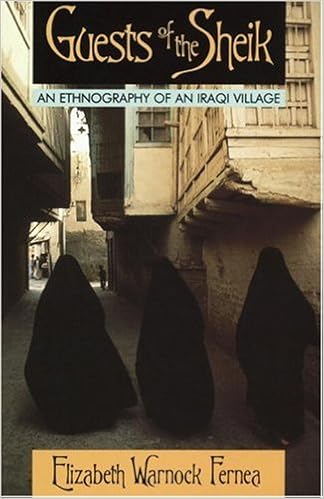
 Guests of the Sheik: An Ethnography of an Iraqi Village
Guests of the Sheik is an example of an ethnography. It details the experiences of Elizabeth Warnock Fernea, who accompanied her husband while he did fieldwork in southern Iraq. It shows how important it is to understand and respect different culture before making judgements and assumptions. It shows the disparity between the gender roles of women in the western world versus those in the village; Fernea is educated and full of freedom, while women in the Iraqi village could not marry anyone outside their tribe, they were very much dominated by men, yet still felt pity for Fernea.
Ethnographic Fieldwork
What is ethnographic fieldwork?
Ethnographic fieldwork is a method of research used by cultural anthropologists in which they live for periods of time with a group of people to understand their lives.
How it works?
-
Through this method of research, anthropologists participate in the activities of a group of people, take notes, photographs, and interview people from the local setting. Therefore, anthropologists learn about the gender, race, ethnicity, religion, kinship, economy, and politics of those people.
-
Fieldwork allows for anthropologists to gather information by experiencing the lives of the local community in which they are working in. It is important because it helps anthropologists perceive the world in more than one way, or thinking that one way of a culture is the only way. This is important as it reinforces connections between people of different cultures and places. This is the same reason why it is important to be diverse, and why many higher education institutions offer classes such as anthropology a diversity for a student that is not of that major.
-
Fieldwork is life changing!
The fieldwork that is done by many anthropologists is life-changing. Anthropologists develop new outlooks on life and even learn new skills and languages. However, these new experiences can be shocking, especially when encountering people that are very different, follow different rules, have different values, and different morals. It is important that any observation that the anthropologists makes, that may go against their own values, they should not harm or attempt to change the ways of that group of people.

Anthropologists write Ethonographies.
-
After conducting fieldwork, anthropologists write ethnographies:
An ethnography is a piece of work written by anthropologists in which they reflect on their fieldwork. They tell stories of the people they studied, their experiences and bringing the voices and stories of those studied to life.